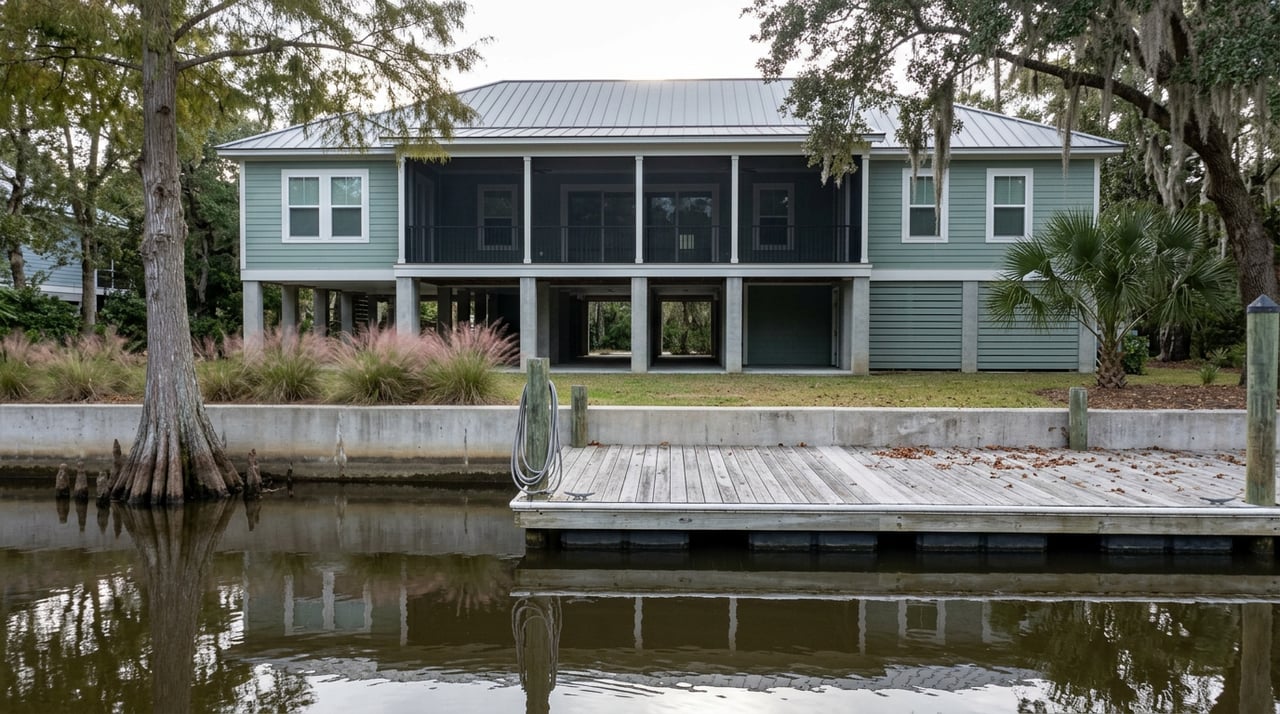
According to a July Citrus County Chronicle report, divers working near the confluence of the Homosassa and Halls rivers this summer are pulling grouper, trout, gar, and the occasional tarpon into view through water that locals say hasn't looked this clear in decades. That's the headline version of what's happening on the river right now. The quieter version, buried in MLS data instead of news photos, is that waterfront listings in Homosassa are sitting on the market about a third longer than the citywide market as a whole. A river getting cleaner and a waterfront market getting faster should move together. As of August 2026, they haven't.
That gap is worth understanding before you assume the restoration project already explains what you're paying for a canal lot, or what you should expect once you own one.
What's actually happening in the water
The Homosassa River Restoration Project started as a volunteer effort in 2018, when a group of residents decided the river's decades-long decline in native grasses and clarity was worth fighting. Founder Steve Minguy and his board spent roughly three years chasing state funding before Tallahassee came through. Since then, the project has drawn about $13 million in legislative appropriations plus roughly $2 million a year in Florida Department of Environmental Protection grants, according to Minguy's account in Citrus County Chronicle reporting this July.
The work itself is now in its third phase, run in partnership with the aquatic restoration firm Sea & Shoreline. Crews use a vacuum dredging barge to pull decades of accumulated muck off the river bottom, piping it through a system that Sea & Shoreline's senior environmental manager Jessica Mailliez described in a Citrus County Chronicle report as being "basically like your attachment to your shop vac." The muck is separated at a staging site, the fine material treated and filtered, and the water returned clean through settling ponds. What follows the vacuuming is the more visible part: replanting Vallisneria, commonly called eelgrass, which once carpeted the river bottom and is now grown in a Sea & Shoreline nursery before being transplanted by hand.
Phase 1 wrapped in November 2023 after covering roughly 23.7 acres and removing an estimated 120 million pounds of muck, based on figures the project itself has reported. The current phase is concentrated around the Halls River confluence, with additional stretches still waiting on permits. State authorization for those segments was expected within weeks as of this summer's reporting, with a federal Army Corps of Engineers permit anticipated later in the year. Minguy has said future work will move downstream, with early conversations about restoration near the protected headspring area of Homosassa Springs.
The model for this approach sits up the coast in Crystal River. HRRP's founders toured the Kings Bay restoration there in 2016, watched it grow past 45 restored acres, and decided the same remove-replant-maintain approach could work on the Homosassa.
What restoration doesn't do
Here's the distinction that gets lost when a project like this makes local news: removing muck and planting eelgrass is ecological work, not navigational work. It's aimed at water clarity, habitat, and the health of the aquatic grass beds, not at deepening or widening the channels boats use to get from a dock to open water.
If you're touring a canal home and the listing agent points out how clear the water looks compared to a few years ago, that's a real and welcome change. It is not the same claim as "this canal has been dredged for boat access." Channel depth, seawall condition, and dock height are separate questions with separate answers, and none of them get resolved by a vacuum barge pulling muck for habitat restoration two coves over. A buyer who assumes restoration progress equals a fixed boat channel is asking the wrong project to answer the wrong question.
The number that doesn't fit the story
If the restoration were already showing up in buyer behavior, you'd expect waterfront listings to be moving faster, or at least holding steady, relative to the rest of the market. As of mid-August 2026, Homosassa had 68 waterfront homes on the market with a median list price around $448,000, and those homes were sitting for a median of 148 days. Citywide, the broader Homosassa market carried a median list price closer to $358,000 in August 2026, with homes moving in about 111 days.
That's a roughly 25 percent price premium for waterfront property, while waterfront homes stay on the market about a third longer. Six-month closed sale data compiled through August 2026 tells a related story: the middle half of Homosassa sales closed between $189,000 and $376,900, a spread wide enough that water access, not square footage, is doing most of the work in explaining where a given home lands in that range.
Put together, the picture isn't a market rewarding the restoration story yet. It's a market where waterfront still commands real money, but where buyers are taking their time, likely weighing the same practical questions that predate any grass-planting program: flood zone, seawall age, whether the home is on septic or sewer, and what insurance actually costs once elevation and construction age are factored in. A cleaner river doesn't remove any of those variables. It sits alongside them.
Why location inside Homosassa still matters more than the headline
Because the restoration is phased and geographically specific, "waterfront in Homosassa" isn't one consistent product right now. A canal that was part of the completed Phase 1 work has a different current condition than a stretch still waiting on permits for later phases, or one further downstream that hasn't been reached at all. The active work this summer has been concentrated near the Halls River confluence. A property elsewhere on the system may benefit eventually, but buying today on the assumption that the whole river already reflects the same clarity you saw in a news photo is buying ahead of the timeline.
This is also where the difference between a home on Old Homosassa's fishing-village waterfront and one on a canal further from the main channel becomes more than a matter of taste. Proximity to completed restoration work, proximity to a marked boat ramp, and proximity to the ongoing permitting process are three different kinds of proximity, and only one of them shows up in a listing photo.
What this means if you're evaluating a Homosassa waterfront property
The restoration is a genuine long-term positive for the river and for the community around it. It is not, by itself, a reason to assume a specific listing is dredged for boats, insured cheaply, or priced ahead of where the market has settled. Before you write an offer on a canal or river home here, it's worth confirming three things separately from the restoration headlines: current seawall condition and who's responsible for repairs, actual channel depth at low tide for the boat you plan to keep, and whether the property's flood zone and elevation certificate line up with the insurance quote you've been given. None of those are answered by muck removal upstream.
The river getting its grass back is a good long story. Knowing which part of that story applies to the specific dock you're buying is the shorter, more useful one.
If you're weighing a waterfront property in Homosassa or trying to make sense of what the restoration means for a specific canal or stretch of river, Trotter Realty has been watching this project unfold from the ground here. Schedule a consultation and we'll walk the specifics with you before you write an offer.