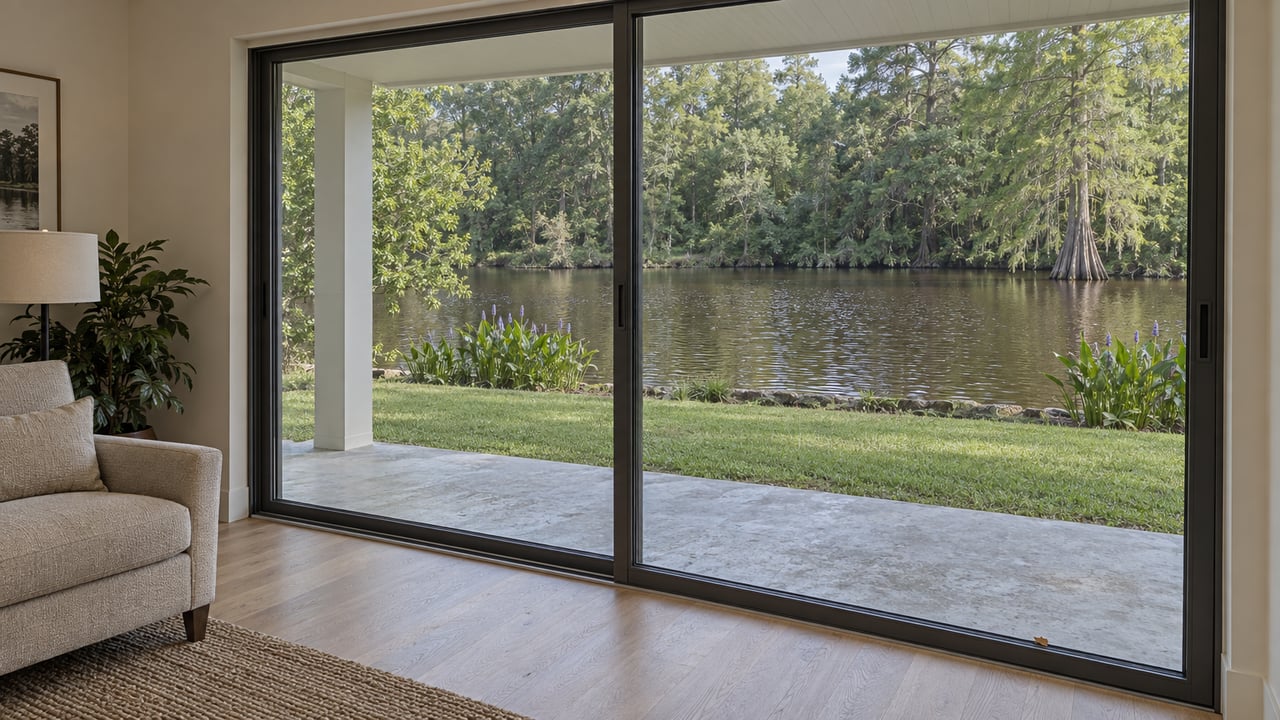
Walk a canal lot on Hernando's stretch of the Tsala Apopka chain in April and you might find a dock standing several feet above dark, cracked mud instead of water. Walk the same lot in June after a good rain and the canal is full to the bank, the dock floats where it should, and a kayak slides off the ramp without a second thought. Same address. Same listing sheet. Two entirely different afternoons.
That gap is not bad luck or a one-time drought story. It is how this particular lake system is built to behave, and it is the single fact that changes what "waterfront" is actually worth on any given Hernando parcel.
The Chain Everyone Calls One Lake
Tsala Apopka gets talked about like a single body of water, but it is a network of 15 lakes covering roughly 22,000 acres, and it has been carved by water control structures into three separate, segregated sections: the Floral City Pool, the Inverness Pool, and the Hernando Pool. Each pool has its own adopted low and high level. The Floral City Pool, for example, is set to run between a low of 40.25 feet and a high of 42.5 feet under Citrus County's own operating standard. Water does not move freely between the three pools. It moves through named, engineered structures that open and close on a schedule tied to rainfall, not to a buyer's closing date.
For a Hernando purchase, that matters because listing language rarely distinguishes between the pools. "Tsala Apopka waterfront" reads the same whether a dock sits on open pool frontage that holds water reliably or on a canal that only fills when a structure upstream lets it.
Last in a Three-Pool Line
The plumbing runs in a specific order. Water enters the Floral City Pool first, largely through the Leslie Heifner and Floral City structures. From there it can move into the Inverness Pool through the Golf Course and Moccasin Slough structures. From Inverness, water reaches the Hernando Pool primarily through the Brogden Bridge structure and connecting culverts. Hernando's own outflow then exits through the S-353 structure on the Tsala Apopka outfall canal or through the Van Ness structure into the Two Mile Prairie.
In plain terms, Hernando sits at the end of the line. When the district shares limited river water across the three pools during a dry stretch, Hernando is the last stop, not the first. When conditions are wet enough that structures close to hold water in, Hernando is often the last pool to see the benefit and the first to start dropping again once the rain stops.
What 2026 Looked Like From the Dock
This year gave that mechanism a real workout. By early April 2026, the district's monthly Withlacoochee River System bulletin reported that all three pools had dropped another four inches over the prior month and sat roughly three feet below their desirable levels, two feet lower than they'd been at the same point the year before. The bulletin noted flatly that the region was on pace to add 2026 to a short list of major droughts going back three decades, alongside 2000-2001, 2007, 2012, and 2017.
Then May turned wet early. The chain picked up nearly nine inches of rain that month, and lake levels rose for the first time in eight months. The rebound was not even across the three pools. The Floral City and Inverness Pools each gained just over an inch, while the Hernando Pool rose more than two and a half inches, the biggest single-month gain of the three.
That relief did not hold. By July, the district reported the Floral City Pool had dropped nine inches in June alone, Inverness had fallen four inches, and Hernando had slipped seven inches. All three pools were sitting four to five feet below their target high levels, and the bulletin pointed out that the chain needs roughly eight inches of rain across the whole watershed each summer month just to hold steady, let alone recover.
None of that means a Hernando canal lot is a bad buy. It means the same lot can show up dramatically differently depending on the month a buyer happens to tour it, and a listing photo taken during a wet stretch is not a reliable stand-in for how that dock looks in April.
The Elevation Number That Isn't Always the Same Number
There is a second, quieter friction point that shows up in paperwork rather than on the water. The district's own operating guidelines for the chain set every staff gauge and every water control structure to the NAVD88 elevation datum. That is a specific vertical reference point, and it is not automatically the same reference an older survey, an appraisal, or a longtime owner's dock records might be using.
The practical effect is that two documents can list what looks like the same elevation figure while describing two different physical heights. Before comparing dock elevation or lowest floor elevation across two Hernando listings, or leaning on a seller's own description of how high their seawall sits, it is worth confirming which datum each number is actually built on. A survey that predates a datum update and a fresh one pulled today are not guaranteed to speak the same language, even when the numbers look identical on the page.
Reading Two Listings the Right Way
County-wide numbers are a reasonable starting point and nothing more. As of August 30, 2026, county-wide MLS data put the median sale price at roughly $263,975, up about one percent from a year earlier, with about 1,235 active listings and a typical 64 days to contract. Those figures describe the average Citrus County transaction. They do not describe what a specific Hernando dock is worth, because that value depends on where the parcel sits in the three-pool sequence, not on the county median.
A few habits close that gap for a buyer:
- Compare price only within the same access type. A home on open Hernando Pool frontage and a home on a feeder canal a mile inland are not the same product, even at a similar list price, and should not be priced off each other.
- Ask when the listing photos were taken, and ask to see the dock and shoreline during a different season if the tour falls in a wet month.
- Ask which structure controls water into that specific stretch, whether it's Brogden Bridge or one of the smaller connecting culverts, and whether the S-353 outflow affects that stretch; together, those details help explain how quickly the property recovers after a dry spell.
- Treat elevation and dock-height figures as datum-dependent until confirmed, especially on older surveys.
The Case for Staying on Hernando's Pool
None of this is an argument against buying here. The chain has weathered four prior major droughts in thirty years and recovered each time once the wet season did its job, and 2026's own mid-year rebound after the May rains shows the same pattern playing out in real time. Hernando's water tends to run shallower and more vegetated than the open stretches upstream, which suits paddling, fishing, and slower cruising more than high-speed boating, and state fisheries data has generally credited the Hernando Pool with some of the chain's better bass fishing. The tradeoff is real, but so is the lifestyle it supports for a buyer who wants that pace of life rather than a different one.
A Couple of Questions Worth Settling Early
Does a dry canal in spring mean a home has lost its waterfront status? No. It means the parcel sits in a managed system whose levels move with rainfall and gate settings. The deed and access rights don't change with the season, but the experience of owning that dock does, and it's worth seeing both versions before you commit.
How do I find out which pool a specific Hernando address sits on? The county's water management mapping shows the boundaries between the Floral City, Inverness, and Hernando Pools, and cross-referencing a parcel address against that boundary, along with the nearest named control structure, is the fastest way to know what you're actually buying into.
If you're weighing a Hernando lot against something in Floral City or Inverness, or you just want a second set of eyes on what a specific dock's history looks like across wet and dry seasons, Trotter Realty can walk the parcel with you and pull the pool-specific context before you write an offer. Schedule a consultation.
This article is general information, not legal, tax or financial advice. Consult a qualified professional about your situation.